
Best quad exercises guide
How to choose quad exercises by squat pattern, leg press, hack squat, split squat, lunge, leg extension, knee comfort, and progression.
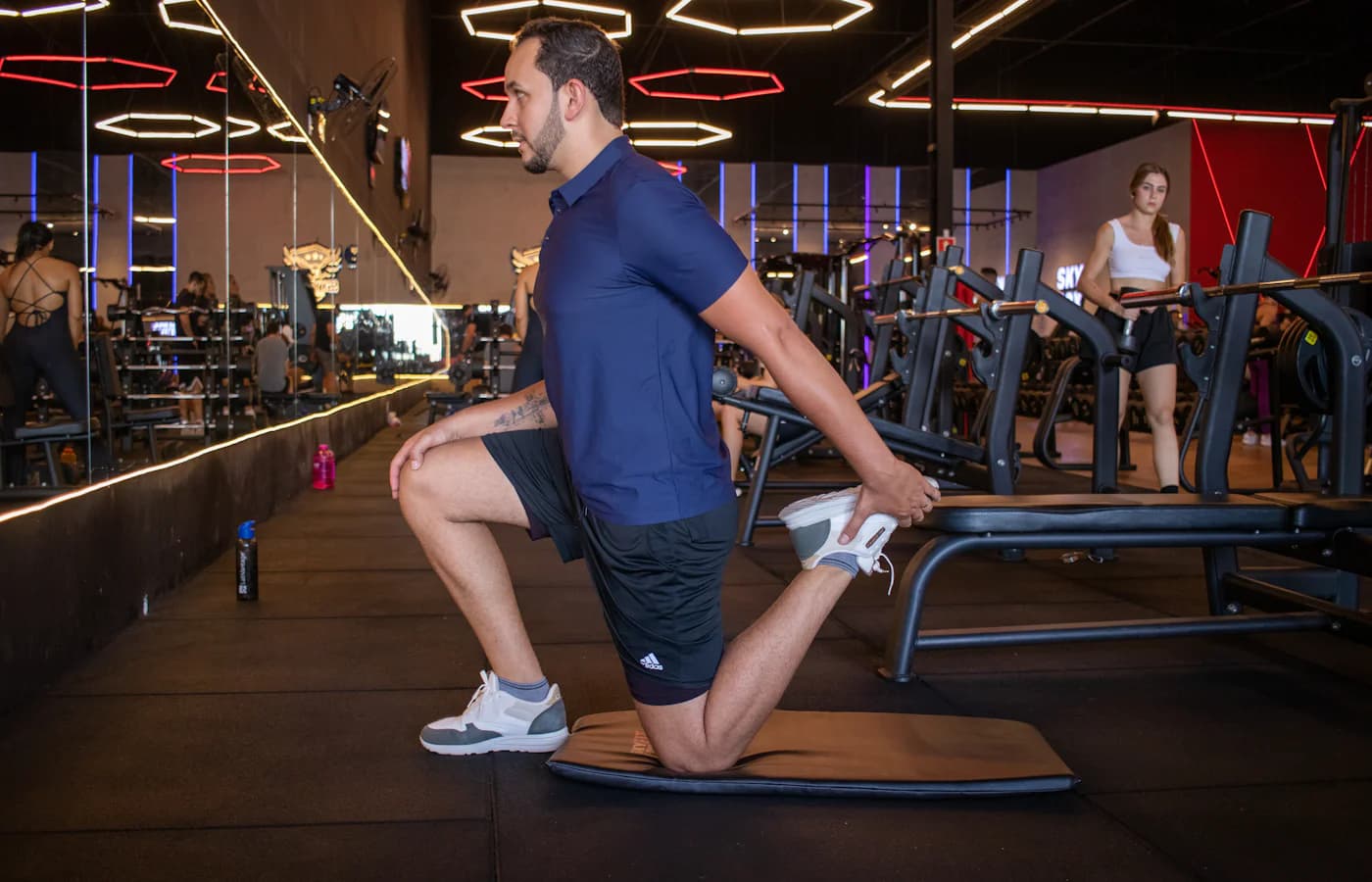
Quick answer
The best quad exercises are the ones that let the knee extensors do hard, repeatable work through a controlled range while your knees, hips, ankles, back, setup, and recovery stay manageable.
Choose the quad job before the exercise: squats and leg presses train knee extension through larger lower-body patterns, hack squats and Smith-machine options can add stability, split squats and lunges add single-leg demands, and leg extensions give direct knee-extension work when bigger lifts are limited by something else.
Most lifters can start with 4-8 hard weekly quad-biased sets from one main squat, hack squat, leg press, or split-squat pattern plus an optional leg-extension or stable machine pattern when extra direct quad work is useful.
How to use this guide
- Treat this as a quad exercise menu, not a mandatory ranking.
- Pick movements you can standardize, progress, and recover from instead of chasing the stance, machine, or depth that a short clip called optimal.
- Keep the main quad slots stable for 4-6 weeks before judging them unless pain, swelling, instability, or recovery problems make that a bad idea sooner.
- When comparing two quad exercises, keep the job, range, stance or foot position, rest, effort target, and weekly lower-body overlap close enough that the comparison is not just random noise wearing gym shoes.
- The useful quad exercise framework
- Squats, leg presses, split squats, and leg extensions
- How to match quad exercises to knees, hips, and equipment
- Common quad-training mistakes
What this does not prove
Short-term physiology, EMG, mechanism, and acute-fatigue evidence can inform choices, but it should not be treated as final proof of long-term results.
- There are not high-quality long-term trials ranking every quad exercise with volume, effort, technique, range of motion, and population perfectly matched.
- Lower-body exercise studies often differ in training status, measurement method, depth, machine setup, stance, and whether volume is equated.
- EMG and biomechanics can explain likely demands, but they do not prove long-term hypertrophy, safety, pain, or sport outcomes from one foot position or machine setup.
- Quad exercise choice is highly individual because knee, hip, ankle, low-back, balance, sport, and equipment constraints vary.
Decision checkpoints
- Setup: choose the version you can repeat with stable positions and normal control.
- Progression: use a clear next step for load, reps, range, pace, time, or weekly volume.
- Common mistakes: fix the boring failure points before adding a harder variation.
- Recovery: keep enough margin that the next important session does not get worse.
- Simplify or switch when setup friction, pain, fatigue cost, or stalled progress becomes the main story.
- Simple two-day gym quad menu
- Lower back limits squats
- Squat-limited by back vs machine-limited by quads
- Limited equipment
Who this is for / not for
- Use this as general education and training planning, not as medical care, diagnosis, individualized rehab, sport-return clearance, or a prescription.
- Beginners should keep the rules conservative and repeatable before chasing advanced intensity, volume, or exercise variations.
- Pain, recent injury, pregnancy or postpartum restrictions, cardiac symptoms, fainting, neurological symptoms, medication constraints, kidney disease, eating-disorder history, or clinician-managed weight loss should change the plan with qualified guidance.
Terms used here
- RIR means reps in reserve: how many good reps you likely had left before failure.
- Hypertrophy means an increase in muscle size from repeated training and recovery.
- Progression means making training gradually harder or better matched over time.
What to do
Start with the knee-extension job
The quadriceps extend the knee, so quad-biased exercises usually need meaningful knee flexion and extension, not just a movement that feels hard somewhere in the legs.
Squats, front squats, hack squats, leg presses, split squats, lunges, step-ups, Smith-machine squats, and leg extensions can all be quad tools when the setup lets the quads limit the set.
- Free-weight pattern: high-bar squat, front squat, goblet squat, heel-elevated squat.
- Machine pattern: hack squat, pendulum squat, leg press, Smith-machine squat.
- Single-leg pattern: split squat, Bulgarian split squat, lunge, step-up.
- Isolation pattern: seated leg extension when a direct knee-extension option fits.
Do not confuse hard with quad-biased
A low-bar squat, heavy hinge, or long-stride lunge can be brutally hard while shifting more of the limiting work toward hips, glutes, back, balance, or bracing.
That is not bad training. It just means the exercise may not be the cleanest quad signal if quad growth is the main goal.
- If bracing, balance, or low back fails first, call it lower-body work rather than clean quad work.
- If knee extension and quad fatigue end the set, it is probably a better quad signal.
- Keep the hard-but-not-quad exercise only when it serves another clear job in the week.
Use stable options when the target keeps losing
A leg press, hack squat, Smith-machine squat, or leg extension can be useful when free-weight balance, bracing, or coordination stops the quads before they get enough work.
Machines are not automatically easier or less serious. They are tools for making the target muscle and progression signal clearer, especially when you need another 2-4 hard quad sets without adding more spinal loading or balance demand.
- Move 2-4 sets to a machine when free-weight setup keeps stealing the target.
- Keep foot position, depth, and range stable for several weeks before judging progress.
- Add sets only when knees, hips, soreness, and the next lower-body day stay manageable.
Let joints and range set the exercise menu
A useful quad exercise should have a controlled range you can repeat. For some lifters that is a deep squat; for others it is a hack squat, leg press, split squat, or leg extension adjusted to the available pain-free range.
Knee travel is not automatically bad, but persistent knee pain, swelling, instability, sharp symptoms, or post-injury return needs qualified guidance instead of internet stance tweaks.
- Use the deepest controlled range that stays repeatable and tolerable.
- Shorten or change the movement when pain, swelling, or instability appears.
- Do not treat knee travel, heel elevation, or one stance width as a universal rule.
Audit before adding another quad exercise
If quads are not progressing, first check whether the current quad slots are readable. Log stance or foot position, depth, range, load, reps, rest, effort, knee comfort, lower-back fatigue, and what actually ended the set.
Add a little work only when the target quad slot is stable, performance is recoverable, and soreness is not spilling into the next lower-body session. Hold the menu when comparable reps are still improving, trim overlap when knees, hips, low back, or total leg fatigue are taking over, and simplify when weekly variation makes progression impossible to read.
- Add: quads limit the set and recovery is clearly fine.
- Hold: reps, load, or range are inching up with the same setup.
- Trim: knees, hips, low back, soreness, or the next lower-body day are getting worse.
- Simplify: too many squat, press, lunge, and extension variations make the signal unreadable.
Compare quad tools by the same job
A leg press, hack squat, Smith-machine squat, split squat, and leg extension can all be useful, but they are not interchangeable tests. A deeper leg press with a narrow stance, a shallow high-foot press, and a wobbly split squat are different exercises before the load number even matters.
If you want to compare options, give each one the same job for 2-4 similar exposures: same weekly slot, similar effort target, stable range, repeatable foot or stance setup, enough rest, and the same rule for stopping the set. Then judge which exercise gives cleaner quad work with less joint irritation and less spillover into the next lower-body day.
- Keep range and depth repeatable before comparing load or soreness.
- Compare similar effort, not one careful set against one grinder.
- Keep the same weekly slot so fatigue from hinges, running, sport, or another leg day does not rig the result.
- Pick the tool that gives the clearest quad signal, not the one that wins one noisy session.
How it looks in practice
Simple two-day gym quad menu
A practical starting menu could use 2-3 sets of 6-10 reps on a squat, hack squat, or leg press on the first lower day, then 2-3 sets of 10-15 reps on leg extensions, split squats, or a different machine pattern later in the week.
That gives many lifters 4-6 direct quad-biased sets before adding more lower-body work. Add sets only if knee comfort, soreness, performance, and total leg fatigue stay manageable.
Lower back limits squats
Keep squats only if they are serving a clear job. If a planned 3 sets of squats turns into mostly bracing and lower-back fatigue, use 1-2 controlled squat sets and move another 2-4 hard quad sets to leg presses, hack squats, Smith-machine squats, supported split squats, or leg extensions.
The goal is not to ban squats. It is to make sure at least some weekly quad work is limited by the quads instead of every set becoming a trunk and position contest.
Squat-limited by back vs machine-limited by quads
If a squat variation is limited by bracing, balance, or low-back fatigue, keep it only for the job it clearly serves.
If a hack squat, leg press, Smith-machine squat, or leg extension lets the quads end the set cleanly, that machine slot may be the more practical hypertrophy tool even if it looks less impressive.
Limited equipment
A simple home week might use 3 sets of 8-12 goblet squats or heel-elevated dumbbell squats, then 2-3 sets of 8-15 split squats, reverse lunges, step-ups, sissy-squat progressions, or banded leg extensions.
The practical constraint is progression and repeatable setup, not whether the exercise has a famous machine attached to it. Track stance, depth, load, reps, and knee comfort closely enough that the same exercise can improve.
Leg-extension add-on
When the main lower-body lifts already cover squats, hinges, and glute work, leg extensions can sit in a small accessory slot: 2-3 controlled sets after the heavier work can be enough to test whether direct knee-extension work helps.
Use a range that feels controlled, avoid turning it into a knee-pain challenge, and reduce the slot if soreness or joint irritation spills into the next lower-body session.
Four-week quad menu review
A lifter keeps hack squats for 3 sets of 6-10, leg presses for 2 sets of 10-15, and leg extensions for 2 sets of 12-20. They log foot position, depth, load, reps, rest, knee comfort, lower-back fatigue, and whether the same exercises are improving when repeated.
After four weeks, hack squats and extensions are up, but leg presses are flat because every set becomes a hip and low-back grind. The next move is probably to adjust or swap the leg-press slot, not add a fourth quad exercise and bury the signal under more fatigue.
Leg press setup comparison
A lifter tests two leg-press setups for the same quad slot. For two exposures, they use a moderate foot position, controlled depth, 2 sets of 10-15, and about 1-3 reps in reserve. For the next two exposures, they move the feet slightly lower but keep range, rest, effort, and weekly placement the same.
If the lower-foot setup gives cleaner quad fatigue without knee irritation or next-session fallout, keep it. If it shortens range, turns into foot-pressure guessing, or makes knees cranky, the older setup probably wins even if the internet promised a more optimal quad angle.
Common questions
Are squats required for quad growth?
No. Squats are a useful, loadable quad and lower-body tool, but the evidence does not make barbell squats mandatory for every lifter or every quad goal.
If squats fit your body, equipment, and recovery, keep them. If they are always limited by low back, balance, confidence, or painful positions, hack squats, leg presses, split squats, Smith-machine squats, step-ups, lunges, or leg extensions may give a cleaner quad slot.
Are leg extensions bad for knees?
Leg extensions are not automatically bad or fake training. They are a direct knee-extension exercise, so the useful question is whether the setup, range, load, and symptoms fit the person using them.
Do not use them as a knee-pain test. If extensions cause persistent pain, swelling, instability, sharp symptoms, or a worse next lower-body day, adjust the range, change the slot, or get qualified guidance instead of forcing the movement.
Should I chase the deepest possible quad exercise?
Use a controlled and repeatable range, not a social-media depth contest. Larger ranges can be useful when tolerated, but the range still has to be stable enough to progress and recover from.
If deeper range changes the limiter from quads to pain, balance, hip position, or low-back fatigue, the practical answer may be a different exercise or a smaller repeatable range.
Common mistakes
- Treating barbell back squats as mandatory for every quad goal.
- Picking the hardest knee-dominant exercise when a more stable option would make the quads the actual limiter.
- Calling any hard leg exercise quad work even when hips, lower back, balance, or conditioning always limit the set first.
- Changing stance, heel elevation, machine, foot position, and depth every week until progression cannot be measured.
- Using leg extensions as a pain test or ego lift instead of controlled direct quad work.
- Adding more quad exercises when the actual bottleneck is recovery, sleep, food, programming, technique, or load selection.
- Comparing a familiar squat to a brand-new machine setup and pretending the machine lost.
- Ignoring persistent knee, hip, ankle, back, numbness, or swelling symptoms because an exercise is supposed to be optimal.
Caveats
- Quad training is not medical care. Persistent pain, swelling, locking, instability, numbness, radiating symptoms, post-surgical training, or injury rehab belongs with qualified clinical guidance.
- Quad exercises overlap with glutes, adductors, calves, trunk, and lower-back work, so total lower-body fatigue matters across the week.
- A movement that is excellent for one lifter can be a poor fit for another because of limb lengths, hip anatomy, ankle mobility, knee history, equipment, skill, and recovery.
- The set and rep examples above are practical starting points, not proof that one exact quad-volume target fits every lifter.
- Muscle activation and exercise-ranking content can provide clues, but it does not prove a universal long-term hypertrophy ranking.
Why the answer looks like this
The evidence supports quad exercise selection as a programming problem: understand the knee-extension role of the quadriceps, choose exercises that match the target and equipment, accumulate enough quality work, and manage fatigue so progress can repeat.
The quads extend the knee
NCBI Bookshelf anatomy describes the quadriceps as the anterior thigh muscle group responsible for knee extension, with rectus femoris also contributing to hip flexion and the group contributing to posture, gait, stair climbing, and patellar stability.
That supports using squat, leg press, hack squat, split-squat, lunge, and leg-extension patterns as different quad tools rather than pretending one movement is always best.
Exercise choice changes the whole lower-body stimulus
A supervised hip-thrust-versus-back-squat trial found similar glute growth between groups but greater quadriceps and adductor growth from back squats in untrained participants.
That does not make squats universally best for quads. It supports the simpler point that exercise choice changes which lower-body muscles get the clearest stimulus.
Single-joint work can solve a real problem
The broader single- versus multi-joint exercise literature does not make leg extensions mandatory, but it also does not make them fake training.
A leg extension may be useful when squats or presses are limited by hips, back, balance, or skill before the quads receive enough direct work.
Machine setup matters, but the evidence is not a ranking chart
A systematic review of leg-press EMG studies reported strong quadriceps activity during leg-press work and greater quadriceps activation at larger knee-flexion angles in the included studies.
The same review also found that evidence on how specific setup changes alter EMG was not compelling because few studies matched their findings. That supports keeping foot position, range, and setup consistent when comparing leg-press variants, not pretending one universal foot placement is proven best.
Range, progression, and fatigue still matter
Resistance-training guidelines and hypertrophy reviews emphasize progressive overload, sufficient volume, useful range of motion, loadability, exercise selection, rest, frequency, and training status rather than one magic quad movement.
For quad growth, that means repeatable technique, enough hard sets, recoverable volume, and controlled range matter more than winning a squat-versus-leg-press argument.
Limitations
- There are not high-quality long-term trials ranking every quad exercise with volume, effort, technique, range of motion, and population perfectly matched.
- Lower-body exercise studies often differ in training status, measurement method, depth, machine setup, stance, and whether volume is equated.
- EMG and biomechanics can explain likely demands, but they do not prove long-term hypertrophy, safety, pain, or sport outcomes from one foot position or machine setup.
- Quad exercise choice is highly individual because knee, hip, ankle, low-back, balance, sport, and equipment constraints vary.
Related reading and tools
- Squat guide — Use stance, depth, bar position, and limiter checks before blaming the whole quad menu.
- Front squat vs back squat guide — Compare two squat patterns without turning one lab clue into a universal winner.
- Best leg exercises guide — Place quad work inside the broader lower-body exercise menu.
- What makes a good hypertrophy exercise? — Use the broader exercise-selection framework behind this guide.
- Exercise selection for hypertrophy guide — Choose muscle-building movements by target fit, stability, range, and fatigue cost.
- Volume landmarks guide — Use weekly set targets as adjustable landmarks rather than fixed quad prescriptions.
- Best glute exercises guide — Separate quad-biased work from glute-biased lower-body choices.
- Best hamstring exercises guide — Separate knee-dominant quad work from hamstring hinges and curls.
- Strength training topic — Browse the rest of the strength and hypertrophy library.
References
- Bordoni and Varacallo. Anatomy, Bony Pelvis and Lower Limb, Thigh Quadriceps Muscle. StatPearls / NCBI Bookshelf (updated 2023)
- Martin-Fuentes et al. Evaluation of the lower limb muscles electromyographic activity during the leg press exercise and its variants: systematic review (2020)
- Plotkin et al. Hip thrust and back squat training elicit similar gluteus muscle hypertrophy and transfer similarly to the deadlift (2023)
- ACSM position stand: Progression models in resistance training for healthy adults (2009)
- Gentil et al. Acute effects and long-term adaptations of single- and multi-joint exercises during resistance training (2017)
- Pallares et al. Effects of range of motion on resistance training adaptations: systematic review and meta-analysis (2021)
- Schoenfeld et al. Dose-response relationship between weekly resistance training volume and increases in muscle mass: systematic review and meta-analysis (2017)
- Schoenfeld et al. Strength and hypertrophy adaptations between low- vs. high-load resistance training: systematic review and meta-analysis (2017)
- Vieira et al. Effects of resistance training to muscle failure on acute fatigue: a systematic review and meta-analysis (2022)